RATES & BOOKING
Sydney Airport parking rates: pre-book or pay on the day
Pre-booked parking and drive-up parking are separate products with separate pricing. Knowing the difference is the single most useful thing you can do before you travel.
Rates & Booking
Pre-book vs drive-up
Two pricing structures
The Core Split
Pre-booked versus drive-up: two structures for two kinds of traveller
Pre-booking means you reserve a space and a rate before you travel, usually at the time you book. Drive-up means you arrive, take a ticket, and pay the posted rate for however long you stay. Sydney Airport publishes drive-up and overstay rates separately from pre-booked parking information.
That separation is the whole point. Pre-booked pricing rewards planning. Drive-up pricing rewards flexibility. There is no trick to it, just two structures for two kinds of traveller — and the gap between what each costs can be significant, especially for a multi-day stay during a peak period.
The Rates Ledger
How each pricing structure works
Each car park at Sydney Airport has its own rate card. The structure — not the headline number — is what determines whether pre-booking or driving up makes sense for your trip.
P7 International
T1 · Terminal-side
Walk 2–5 min to T1 check-in · pre-book and drive-up both available · overstay charged at drive-up rate
P3 Domestic
T2 / T3 · Terminal-side
Walk 2–5 min to T2 and T3 · pre-book and drive-up both available · short-stay drive-up pricing is timing-based
Blu Emu Long-Stay
Off-terminal · Shuttle
Shuttle bus to all terminals · pre-book rates for multi-day stays · overstay charged at the daily drive-up rate
Drive-Up Rates
All car parks · Timing-based
Charge depends on time in the car park · short stop costs little · multi-day stay costs proportionally more · posted at the gate
Timing-Based
How drive-up rates are structured
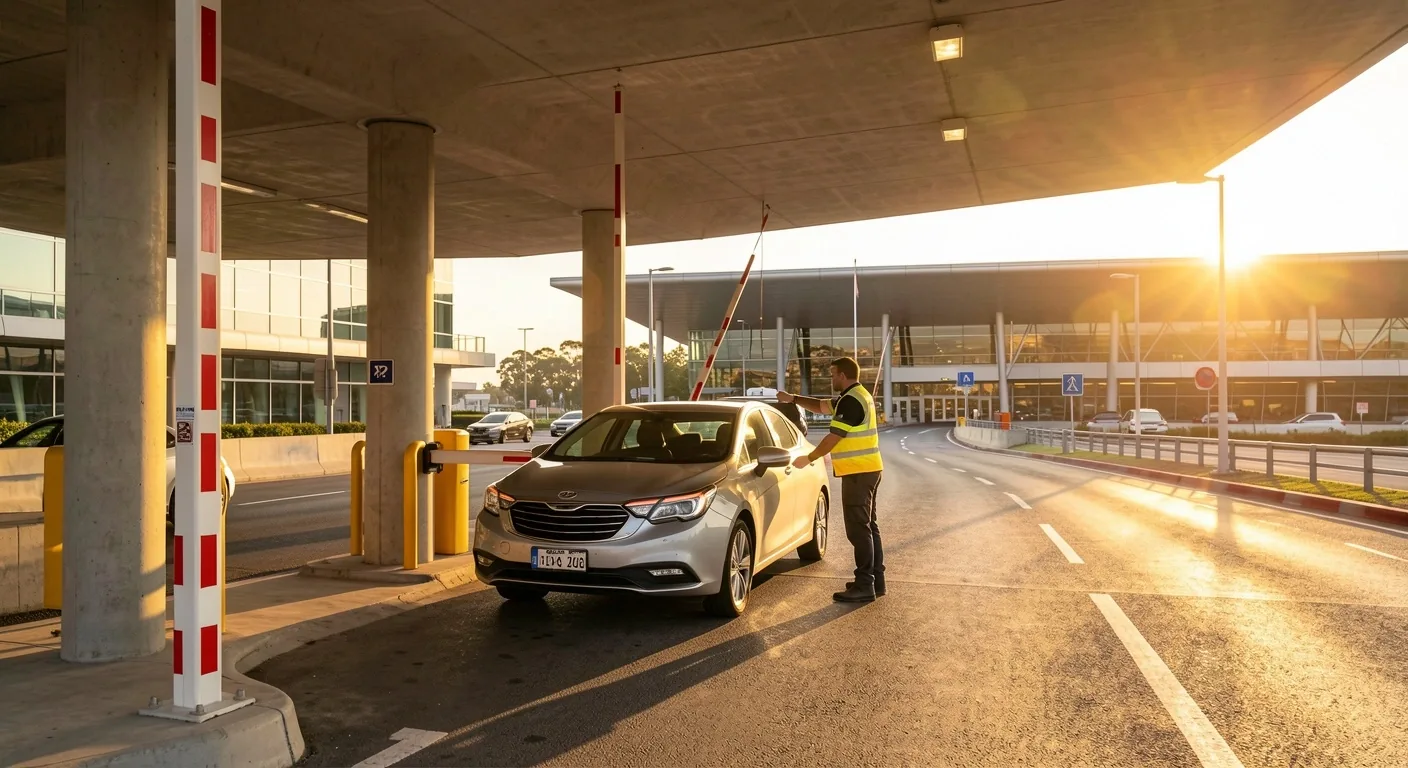
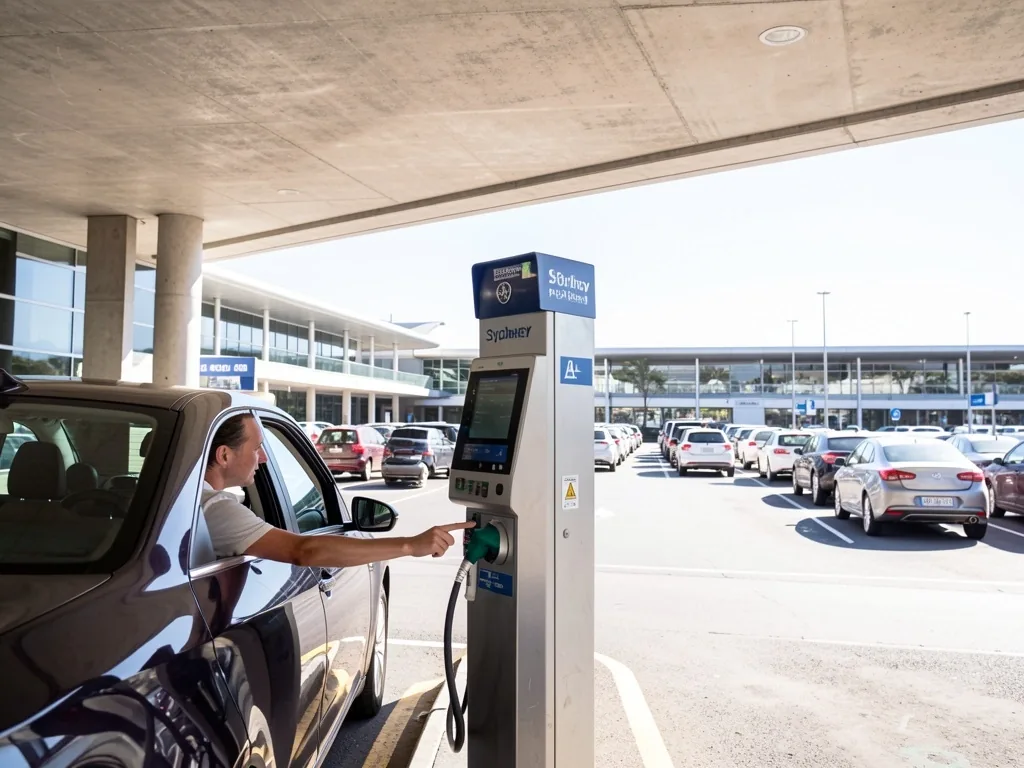
Drive-up rates are timing-based. The charge depends on how long your vehicle is in the car park, which means a quick stop costs little and a multi-day stay costs proportionally more. The posted rate applies whether you planned the trip or not.
For a short drop-in, drive-up is often the simplest route: no booking, no commitment, just park and go. For a long stay, the timing-based structure is exactly where costs climb. That is why long-stay travellers tend to compare pre-booked rates first.
Drive-Up Pricing
No booking required
Pay for time occupied
Why Pre-Booking Costs Less
Why pre-booking usually costs less overall
When you pre-book, you agree the rate in advance and know your total before you leave home. That certainty is worth as much as the number itself. You are not guessing what a delayed flight or an extra day will cost.
Pre-booking also secures your space during peak periods, when car parks fill quickly. If you are travelling at the start of a school holiday or a long weekend, having a space reserved removes the risk of arriving to a full car park. The rate is locked either way.
Overstay Charges
Overstay charges explained
Overstay rules apply when you leave after your booked window. If your return flight is delayed, or your trip runs longer than planned, you may owe extra on exit. The airport publishes overstay charges alongside drive-up rates.
The practical fix is a buffer. Book a return time slightly later than your expected arrival, especially for long-haul international trips where delays are common. A few extra hours of cover costs far less than an unexpected overstay bill at the gate.
A Quick Way To Compare
Match the booking method to your trip
Short stay, fixed plans
Best when you know your times and want the cheapest rate locked
Pre-book terminal-side
Short stay, uncertain plans
Best when your return might shift and you value flexibility over a locked rate
Drive-up, posted rate
Long stay, budget-led
Best for multi-day trips where the rate difference is worth a shuttle ride
Compare P3 and Blu Emu
Late return risk
Add a buffer to your return time to cover an unexpected overstay charge
Buffer your return time
Booking Steps
Booking steps, start to finish
1
Have your details ready
Flight number, terminal, entry date and time, and return date and time. Your return time sets your total stay, so it is the field to get right.
2
Match the car park to your terminal
T1 international travellers want the international car parks, while T2 and T3 travellers want the domestic side. Then choose between terminal-side convenience and a long-stay option with a shuttle.
3
Confirm and save your reference
Confirm the booking, save your reference, and you are done. Keep the reference handy on the day — you will need it at the car park entry and exit.

When It Saves Time
When booking ahead saves time
Booking ahead saves time when the car park is busy, when your schedule is fixed, and when your trip is long enough that the rate difference matters. It also saves the small stress of working out parking on the morning of a flight.
It saves less when you are parking for an hour or two, or when your plans might change. For a quick pick-up within the free fifteen-minute window, you will not be booking at all. Match the tool to the job.
Questions
Rates and booking questions
Is pre-booked parking always cheaper than drive-up?
Not always. For a short drop-in of an hour or two, drive-up can be the simpler and cheaper choice because you pay only for the time occupied. Pre-booking tends to cost less for longer stays, especially multi-day trips, where the locked daily rate beats the timing-based drive-up charge.
What happens if I overstay my booked time?
Overstay rules apply when you leave after your booked window. If your return flight is delayed or your trip runs longer, you may owe extra on exit at the drive-up rate. Booking a return time slightly later than your expected arrival — a buffer — is the practical fix, especially for long-haul international flights where delays are common.
Do I need to book for a quick pick-up?
No. For a quick pick-up within the free fifteen-minute window, you will not be booking at all. Drive-up is the right tool for that job. Booking ahead makes sense when the car park is busy, your schedule is fixed, or your trip is long enough that the rate difference matters.
Which car park should I choose for an international flight?
T1 international travellers want the international car parks, such as P7, for a short walk to check-in. For a longer international trip, a long-stay option like Blu Emu with a shuttle can offer a better daily rate. Factor in the shuttle time and the convenience of parking beside your terminal before you commit.
The Whole Trip
Keep the total in view
The daily rate is only part of the cost. Factor in the walk or shuttle time, the convenience of parking beside your terminal, and the risk of an overstay charge if your flight is late. A slightly higher rate with a short walk can be better value than a cheaper rate with a shuttle and a wait.
Work out your whole trip before you commit. For most travellers, the comparison comes down to two or three realistic options, not a long list. Pick the one that fits your terminal and your budget, and book it.
Next Steps
Compare · book · save reference
Two or three options
Where To Next
Take the next step for your terminal
International T1
Read the parking guide
Domestic T2 / T3
Read the parking guide
Long-Term
Check long-stay options
Map & Access
See routes and access
Need help choosing the right car park for your trip?
Contact us